

What to Do If Your Roof Is Damaged During a Hurricane
Your roof, whether it be for your home or for your business, is one of the most vulnerable parts of your property. So when a hurricane hits, high winds, flying debris and heavy rain can cause serious damage that puts the safety of your building and your people at risk. What you do in the hours and days that follow will have a lasting impact on how quickly and effectively you recover.
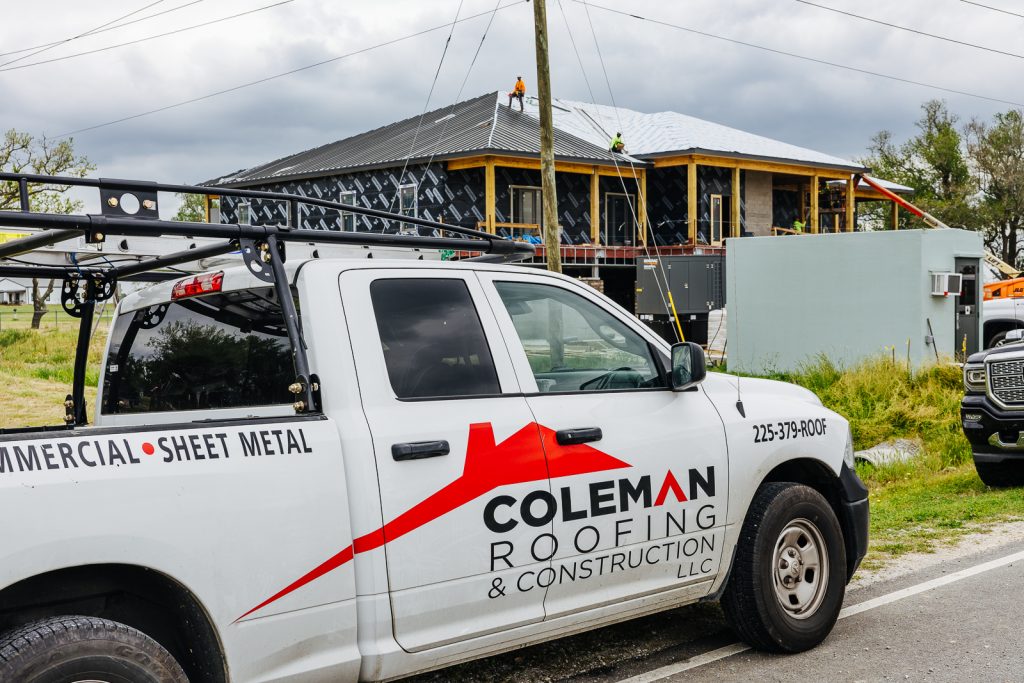
Coleman Roofing and Construction has helped homeowners and businesses across Louisiana and the Gulf Coast navigate these challenges, and we’re here to guide you through the steps to protect your property and get back on track.
Put Safety First
The first priority after a hurricane is always safety. Even if the storm has passed and the weather seems clear, your building could still pose serious hazards. Structural elements that once supported the roof may have shifted or weakened during high winds or flying debris impacts. Portions of the roof could be at risk of collapse. Standing water can hide holes or electrical dangers, and debris could be unstable.
Make sure no one enters damaged areas until the site has been inspected by professionals. Restrict access to these areas and follow your emergency plan. The goal is to protect people from harm. Injuries slow recovery and create additional complications, so take safety seriously at every step.
Conduct a Visual Assessment from the Ground
Once you are certain it is safe to do so, take a visual survey of your property. Focus on observing from the ground or a secure location where you don’t risk injury. Use binoculars or a drone to get a better look at the roof without having to get too close.
This is not the time to try to climb up and inspect the damage yourself. Even experienced maintenance staff should avoid walking on the roof until it has been cleared by a structural engineer.
When surveying the damage, look for signs such as:
- Missing or shifted roof panels or membrane sections
- Punctures or holes caused by debris
- Buckled or sagging areas
- Water intrusion along walls or ceilings
- Pooling water that wasn’t there before the storm
- Visible damage to rooftop equipment or flashing
Make note of what you see. This information will help our roofing professionals prepare for our inspection and allow you to communicate clearly with your insurance company.
Document the Damage in Detail
Detailed documentation is one of your most powerful tools during recovery. It helps support insurance claims, ensures you get an accurate assessment from contractors and keeps your records organized for future reference.
Take photos of all visible damage, both on the exterior and inside the building. Wide-angle shots give context while close-up photos capture the specific issues. Video can be useful too, especially for showing conditions that may change rapidly such as active leaks or pooling water.
Write down observations about the damage.
Include the date and time you first saw the problem and describe any related issues, such as equipment that was impacted or areas of the building that are no longer safe. Include details about debris that struck the building and note anything that might have contributed to the damage.
The more thorough your documentation, the smoother the insurance and repair process will be. It can also help prevent disputes about what was caused by the storm versus pre-existing conditions.
Take Immediate Action to Prevent Additional Damage
Damage from a hurricane often gets worse if left unaddressed. Water that enters through compromised roofing can spread quickly. It can soak insulation, damage electrical systems and lead to mold growth. The longer water intrusion continues, the higher the cost and complexity of repairs.
If it is safe to do so, take temporary steps to limit further damage. Place commercial-grade tarps or coverings over damaged sections of the roof. Secure these coverings so they can withstand ongoing wind or rain. Inside the building, move valuable equipment, materials or inventory away from vulnerable areas. If possible, set up containment around leaks to prevent water from spreading further.
These measures not only protect your property but also demonstrate to your insurance carrier that you took reasonable steps to mitigate the damage. In many cases, policies require prompt action to prevent additional loss.
Contact a Roofing Contractor with the Right Experience
After a hurricane, it is essential to choose a contractor who understands your roofing system and has experience working with a wide variety of roofs. Coleman Roofing and Construction has spent years helping homeowners and business owners throughout Louisiana and the Gulf Coast recover from hurricanes.
We provide emergency tarping, inspections and detailed repair plans designed to minimize downtime. Our team knows how to work on complex roofing systems safely and efficiently. We also provide thorough documentation that supports insurance claims and keeps the process moving.
Be cautious of contractors who show up after a storm offering fast fixes. Storm chasers may not have the experience or equipment needed for accurate roofing work, and they may disappear before the job is done. Choose a partner with a strong local presence and a proven track record.
Notify Your Insurance Provider Quickly
Once you have secured the property and begun the documentation process, contact your insurance carrier as soon as possible. The claims process takes time, and starting early helps prevent delays.
Provide your insurance company with the documentation you’ve collected, including photos, videos and written notes. Share reports from your roofing contractor if available. Keeping the lines of communication open with your insurer will make it easier to coordinate inspections and move the claim forward.
Plan Repairs with Long-Term Resilience in Mind
When it comes time to repair or replace your roof, take the opportunity to improve your building’s protection against future storms. The materials and methods used during repairs can make a difference in how your roof performs during the next hurricane. Our team works with business owners and property managers to design solutions that:
- Provide stronger resistance to wind and water
- Are tailored to the structure of the building and its use
- Support long-term cost control and maintenance goals
We also plan work in ways that help keep your operations running, with as little disruption as possible. A quality repair or replacement can help protect your property for years to come.
Partner with a Company That Puts You First
Hurricane damage can bring uncertainty and stress. What you need is a partner who focuses on doing the right thing and delivering quality work that lasts. Coleman Roofing and Construction has been helping businesses protect what matters most for decades. We don’t cut corners and we don’t disappear after the job is done. We’re here for the long haul.
The period following a hurricane is critical for business owners and property managers. The actions you take can mean the difference between a smooth recovery and long-term challenges. Focus on safety, document everything carefully and choose partners you can trust.
When it comes to protecting your roof and what matters most to you, Coleman Roofing and Construction is ready to stand with you. If your building has suffered roof damage in a hurricane, contact us today. We’ll help you secure your property, plan repairs and move forward with confidence.